


PhD Pinboard: Exploring Matchplay Load in Youth Tennis Players

Updated: Aug 6
This PhD Pinboard article by Péter János Tóth investigates training load metrics in different matchplay situations in youth tennis players.

I'm Péter János Tóth, a researcher and lecturer at the Hungarian University of Sports Science, as well as a former strength and conditioning coach and sport science specialist at the Piatti Tennis Center in Italy — the academy where the current world number one, Jannik Sinner, was developed.
Currently, I serve as the strength and conditioning coach for ATP player Zsombor Piros within the Ludovika Tennis Section. Additionally, I am a co-founder and Head of Sports Science at Profi Med & Performance company.
The primary focus of my research lies in understanding the physical load profile of modern tennis and exploring how complex, multifaceted methodologies can most effectively enhance player performance.
The PhD Journey
The main direction of my doctoral research was primarily driven by practical experience. Having competed at a high level in tennis during my youth and worked for years as a tennis coach, I had a firsthand, comprehensive understanding of the physical demands of tennis matches. However, I always wanted to understand more deeply how to prepare players for competition with even greater precision - specifically by factoring in tactical attributes and other individual characteristics.
In my personal view, modern professional tennis lags behind other ball games when it comes to performance monitoring.
While sports like football, rugby, handball, or Australian rules football have utilized Electronic Performance and Tracking Systems (EPTS) in both training and matches for over a decade, tennis only officially permitted their use in professional competition starting in 2024. Prior to this, with the exception of a few tournaments, coaches could only gather load data from training sessions.
As a coach, I observed that tennis coaches frequently rely solely on 'coaching intuition' or long-established 'best practices' when preparing players. While these are undoubtedly valuable in many cases, I believe it is essential to support these intuition-based coaching decisions with objective data.
My deeper objective - fully aligned with Martin Buchheit’s words, 'Context matters more than content' - was to enable better differentiation and individualization of player workloads during training. This is achieved by objectively knowing what it takes to win, and identifying how players with different styles vary across specific technical, tactical, and physical metrics.
Based on all of this, our work was guided by research areas seeking answers to the following questions:
Is there a difference in external and internal load when applying different 'closed' strategic situations (where the coach predetermines the tactics)?
Is there a difference in load profiles between defensive and offensive players when applying different 'open' strategic situations (where the coach does not use any tactical instructions)?
Is there a difference in load metrics between match winners and losers?
We divided our measurements into two separate, well-defined experimental phases.
Methodology: Phase 1 – The Controlled Experiment
In the first study, we wanted to see how tactical intent alone overrides physical performance metrics. To achieve this, we selected six of the top junior U16-U18 players in Hungary, some of whom already possessed ATP ranking points.
The investigation began with precise anthropometric measurements, followed by a 15-minute general and a 10-minute tennis-specific warm-up. Players were paired based on their national rankings, and each participant played two simulated matches, each lasting 10 minutes, in a tie-break format on outdoor clay courts. They were given 5 minutes of passive recovery between the two matches.
Obviously, the duration of these training matches is not completely optimal; however, since we were working with elite players during their competitive season, measuring longer or full-length matches was not feasible in order to avoid overtraining and excessive fatigue.
The twist was that they received strict tactical instructions before the matches:
In the offensive condition: They were required to play aggressively, take risks, and actively dictate and finish the points.
In the defensive condition: The command was to keep the ball in play, prolong the rallies, and minimize unforced errors.
What tools did we use to analyze match load?
To observe the 'cost' of these two distinct strategies on the body and stroke technique, we implemented three performance monitoring methodologies:
GPS tracker (Catapult OptimEye S5 micro-sensors): Players wore these micro-sensors in a neoprene vest positioned between their scapulae as per manufacturer guidelines. The devices measured PlayerLoad™, and the occurrence of low-intensity (< 2.5 m/s²) and high-intensity (≥ 2.5 m/s²) changes of direction (COD).
Racket-mounted sensor (Zepp Tennis 2.2.1): These sensors were attached directly to the butt cap of the tennis rackets (Giménez-Egido et al., 2020). Utilizing gyroscopes and accelerometers, they detected forehand and backhand shot velocities (km/h), as well as the ball's spin rate (rpm).
Rating of Perceived Exertion (RPE): Immediately following the matches, subjects scored their exertion using the well-known Borg CR-10 scale, answering the simplest coaching question on a scale from 0 to 10: 'How demanding was the match?' (Murphy et al., 2014).
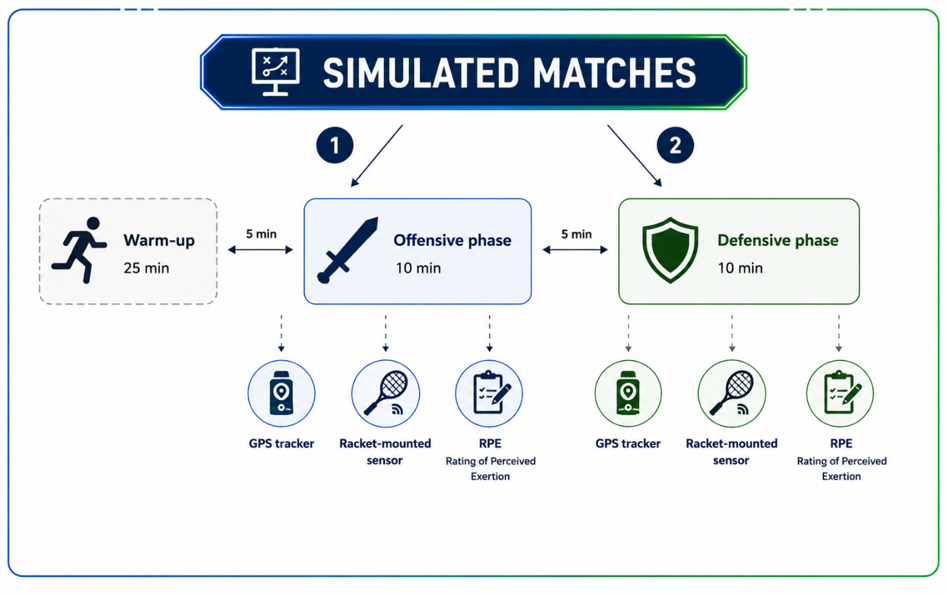
Figure 1. The schematic illustration of the experimental design for the first phase.
Methodology: Phase 2 – The Open Match Simulation
While controlled testing reveals a great deal, tennis is an open-loop sport where players compete within their own styles and react dynamically to the opponent. Therefore, in the second phase, we removed all tactical constraints and observed sixteen elite academy players during a three-day round-robin winter 'mini-tournament' on indoor clay courts.
Prior to the tournament, players were categorized according to their specific playing style using a standardized protocol based on interviews with both the players and their coaches (Pokharel & Zhu, 2021). In cases where the coach's and the player's assessments differed, an independent expert made the final determination regarding the playing style. Based on this approach, the sample consisted of nine aggressive baseliners and seven defensive baseliners.
The players competed in a total of 24 official matches, each lasting 30 minutes, played under official ITF rules. To contextualize the collected data, we integrated three distinct monitoring components:
1. GPS tracker (Catapult Vector S7 micro-sensors): In this phase, we leveraged Catapult’s tennis-specific machine learning model (Perri et al., 2023) to partition the mechanical load into key components:
Stroke-based PlayerLoad™ (sPL): Separately quantified the physical stress generated during serves, forehands, backhands, or movements associated with net play.
Movement-based PlayerLoad™ (mPL): Represented the pure workload derived from footwork and running, categorized by the system into four distinct intensity zones ranging from low-intensity positioning to maximal sprinting.
Total Tennis Load (TTL): This variable represents the cumulative sum of sPL and mPL.
2. Activity profile (GoPro HERO 10 camera): Within this parameter group, we analyzed variables that generally define the players' external load in a tennis context, including number of rallies, shot count, effective playing time, between-point rest time, and rally length (short (0-4 shots), medium (5-8 shots), and long (9+ shots) duration).
3. Rating of Perceived Exertion (RPE): Consistent with the first phase of the study, internal load was assessed subjectively using the RPE method.

Figure 2. The schematic illustration of the experimental design for the second phase.
Key Findings
1. The mechanical cost of defense: PlayerLoad™ does not lie
For a long time, a common misconception persisted in tennis that attacking is physically more demanding because the player must dictate the tempo. The match data from our first study proved exactly the opposite.
We found a statistically significant difference in PlayerLoad™ - which aggregates neuromuscular and mechanical stress - with a large effect size.
This suggests that on court the defensive strategy imposed a substantially higher mechanical load on the players' bodies, potentially because a 'survival' strategy on clay requires continuous decelerations, sliding, changes of direction, and chasing down balls. Instead of planning their movements, defensive players are constantly reacting to the opponent; this reactive footwork imposes immense structural stress on the musculoskeletal system.
2. Hitting dynamics: Spin rate, not ball velocity, is the weapon
Data from the racket-mounted smart sensors revealed a highly intriguing pattern. When examining ball velocity, there was no significant difference between the two strategies for either forehands or backhands. This indicates that players struck the ball almost equally hard in defense as they did in attack.
Where, then, did the two tactics diverge? The answer lies in the ball's spin rate. We recorded drastic, statistically significant differences with large effect sizes for both forehand and backhand topspin rates:
In the defensive phase: Players generated extra topspin. This was necessary to clear the net with a higher trajectory and force the ball deep into the opponent’s court, thereby gaining crucial time to recovery-step and reposition.
In the offensive phase: Spin rates dropped, as the objective shifted to flattening out the ball's trajectory, hitting winners, and depriving the opponent of time.
3. The rhythm of modern tennis: Short and explosive
Since both phases of our research were conducted on clay courts, one might intuitively assume that the majority of the rallies would be considerably longer than on a faster surface. However, match data from our second study demonstrated that nearly 68% of all rallies consisted of only 0-4 shots.
Medium rallies (5-8 shots) accounted for 22.8%, while long, marathon rallies (9+ shots) made up a mere 8.6% of the points. Furthermore, an average rally lasted 7.15 seconds, followed by 23.84 seconds of rest. This means that effective playing time constituted only 20.6% of the total match duration.
4. The role of offensive vs. defensive playing styles in decelerations
When comparing aggressive and defensive baseliners based on their natural playing styles, Total Tennis Load showed no significant difference between the two groups. However, there was one critical metric where offensive players significantly outperformed defensive ones: the number of high-intensity (≤ -2 m/s2) decelerations.
An aggressive baseliner steps forward into the court to attack short balls. To do this, following a forward sprint, they must perform a sudden, forceful braking maneuver to establish a stable base before striking the ball.
This high volume of high-intensity decelerations induces a brutal eccentric load on the lower extremities.
5. The loser syndrome, or when psychological stress skews the Borg-scale
To be honest, this was a finding I did not necessarily expect. In the second study, match losers reported significantly higher RPE values, despite the fact that there was no significant difference in their Total Tennis Load or most other external load parameters compared to the winners.
Consequently, they perceived the exact same physical workload as substantially more exhausting. The mental frustration of losing, the sense of helplessness, and elevated stress hormone levels (such as cortisol) can completely override physical reality.

Figure 3. Match load differences by strategy and outcome
Practical Relevance: How do these data shape tennis-specific preparation?
1. High eccentric load - tailored to playing style
Tennis demands brutal braking forces, but in different ways depending on the player's style.
For defensive players, lateral sliding and multidirectional changes of direction place an immense load on the adductors and hip stabilizers. Conversely, offensive players perform a significantly higher number of sudden, forward-facing decelerations during matches, which heavily taxes the knee extensors.
Consequently, when programming eccentric training in the gym (e.g., plyometrics, flywheel training), the dominant planes of motion must be selected based on the athlete's specific playing style.
2. The significance of Repeated Sprint Ability (RSA)
It is incredibly important to integrate 6-8 second, maximal-intensity sprints involving directional changes into modern training protocols, followed by 20-25 second recovery periods, effectively modeling the actual rhythm of match-play.
3. Rotational power from unstable positions
To enable a player to hit the ball with high spin rates even from defensive, out-of-position scenarios, the core must express force under unstable conditions. Anti-rotational and rotational exercises should be prescribed using single-leg, open, or perturbed stances, utilizing what we call positional strength exercises.
4. Managing the 'loser syndrome'
The mental frustration and psychological stress associated with a loss cause severe neural fatigue. In my view, when our player loses a match, we must implement more parasympathetic-focused recovery protocols. Furthermore, during subsequent training sessions, this heightened perception of fatigue must be factored into the microcycle periodization.
Final Reflections
This PhD research has firmly reinforced my conviction that in today’s fast-paced modern tennis, we can no longer rely solely on legacy training theories and coaching intuition.
To remain competitive at the elite level, classical methodology must be augmented with modern monitoring structures. This is especially critical given the increasingly dense competitive calendar, as it provides the insights needed to determine exactly when an athlete requires recovery.
Data is not intended to override the coach's eye, but rather to illuminate the invisible physical and mental price players pay for every tactical decision they make.
The greatest misconception remains that superior physical conditioning simply equates to running more. My measurements proved otherwise: victory does not depend on volume, but on efficient deceleration and explosiveness.
If we blindly increase volume alone, we are not building a better tennis player - we are building a more vulnerable athlete. In my view, these performance monitoring protocols in tennis primarily serve to enhance injury management - now that coaches can access actual workload data from official matches - as well as to optimize Return-To-Play processes.
Ultimately, technology provides an objective mirror: it reveals the discrepancy between what the coach observes from the sidelines and what the player experiences within their nervous system. Data does not restrict coaching; rather, it liberates it, creating a common language that effectively bridges the gap between the on-court tennis coach and the strength and conditioning specialist.
Want to feature your research on the PhD Pinboard?
We’d love to hear from you. Head to the contact page via the link below and start your message with ‘PhD Pinboard’.
Please include a short summary (no more than 250 words) of your PhD research and a sentence or two on why you'd like to share it on the Global Performance Insights blog.
FAQs
1. At what age should workload monitoring be introduced?
We worked with elite U16-U18 players in our research, and this age group serves as the perfect entry point. At this stage, physical workloads (both volume and intensity) reach a threshold where the risk of overuse injuries sharply escalates.
Today's youth are exceptionally receptive to smart technologies; seeing their own hitting velocities or sprint counts drastically boosts their intrinsic motivation and fosters a more professional, conscious mindset toward their sports careers.
2. If there was no difference in hitting velocity, why did defensive players generate more spin?
The distinction lies entirely in the biomechanics: defensive players initiated their tennis strokes from a deeper position, lower behind the ball, imparting extra topspin through rapid wrist and forearm acceleration. This high spin rate provides a safety margin - ensuring a higher trajectory over the net and a deep landing in the opponent’s court - which is essential for regaining court positioning and recovery on clay.
3. Was the higher RPE in match losers strictly driven by the outcome of the loss?
Not exclusively, but psychological factors certainly dominate. Although their actual physical workload matched that of the winners, the feelings of helplessness and mental frustration associated with losing elevate stress hormone levels (such as cortisol). The brain then interprets this heightened cognitive and emotional stress as greater physical exhaustion, skewing the RPE score upward.
4. How can a coach integrate performance monitoring into their daily training if they do not have access to advanced technologies?
If a professional simply has a smartphone, they can use the video camera to track volume-based metrics from the activity profile we analyzed (e.g., shot counts). Combined with a straightforward question to monitor RPE, these two simple methods provide an accessible, low-cost baseline to quantify both the external and internal training workloads of a tennis player.
References
Giménez-Egido JM, Ortega E, Verdu-Conesa I, Cejudo A, Torres-Luque G. Using smart sensors to monitor physical activity and technical–tactical actions in junior tennis players. International journal of environmental research and public health. 2020 Feb;17(3):1068. https://doi.org/10.3390/ijerph17031068
Murphy, A. P., Duffield, R., Kellett, A., Reid, M. (2014) A descriptive analysis of internal and external loads for elite-level tennis drills. Int J Sports Physiol Perform, 9: 863–870. https://doi.org/10.1123/ijspp.2013-0452
Perri T, Reid M, Murphy A, Howle K, Duffield R. Differentiating stroke and movement accelerometer profiles to improve prescription of tennis training drills. The Journal of Strength & Conditioning Research. 2023 Mar 1;37(3):646-51. 10.1519/JSC.0000000000004318
Pokharel, S., Zhu, Y. (2021) Data visualization and analysis of playing styles in tennis. Electron Imaging, 33: 1–8. https://library.imaging.org/ei/articles/33/1/art00003
Tóth PJ, Trzaskoma-Bicsérdy G, Trzaskoma Ł, Négyesi J, Dobos K, Havanecz K, Sáfár S, Ökrös C. Comparison of external and internal training loads in elite junior male tennis players during offensive vs. Defensive strategy conditions: a pilot study. Sports. 2025 Mar 26;13(4):101. https://doi.org/10.3390/sports13040101
Tóth PJ, Csáki I, Négyesi J, Dobos K, Havanecz K, Sáfár S, Ökrös C. External training load and rating of perceived exertion comparison between different playing styles and winning vs. losing matches in elite tennis. Frontiers in Sports and Active Living. 2025 Jul 1;7:1613661. https://doi.org/10.3389/fspor.2025.1613661


Comments